Locked Out of the Lab: The Regulatory Maze Facing Amateur Particle Physicists
Photo: Department of Energy. Lawrence Berkeley National Laboratory. Public Affairs Department. Strategic Resources Office. Photography Services, Public domain, via Wikimedia Commons
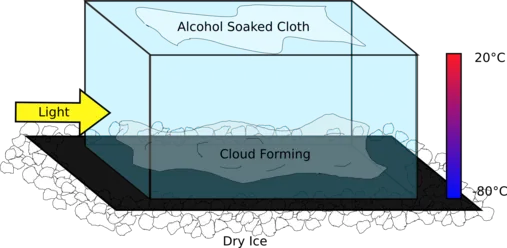
For decades, the image of the basement physicist — hunched over a homemade cloud chamber, watching alpha particle trails curl through supersaturated alcohol vapor — represented something quintessentially American about scientific curiosity. Garage inventors and kitchen-table experimenters have long occupied an honored place in this country's scientific culture. Yet a quiet but significant shift has occurred over the past two decades, one that is steadily closing the door on that tradition.
Today, hobbyist physicists attempting to source even modest radiation materials for educational experiments frequently find themselves navigating a labyrinth of federal regulations, state-level licensing requirements, and outright vendor refusals. The result, many argue, is a chilling effect on citizen science that serves bureaucratic caution more than genuine public protection.
The Regulatory Landscape
The framework governing radioactive materials in the United States is administered primarily by the Nuclear Regulatory Commission, though thirty-nine states have entered into agreements with the NRC to manage their own licensing programs. Under this system, the acquisition of many radioactive isotopes — even those historically sold in educational kits — requires either an NRC materials license or a specific exemption.
The NRC does maintain exemptions for small quantities of certain isotopes intended for educational use. Americium-241, for instance, found inside household smoke detectors, falls under a consumer product exemption. Certain low-activity check sources used for Geiger counter calibration are similarly accessible. But the practical reality is more complicated. Vendors, wary of liability and uncertain about who qualifies as a legitimate buyer, routinely decline to sell to individuals without institutional affiliation. The regulatory text may permit a transaction; the commercial ecosystem often does not.
Post-September 11 security measures added another layer of restriction. Concerns about radiological dispersal devices prompted tighter scrutiny of radiation-related purchases, and many suppliers quietly adopted policies requiring buyers to demonstrate institutional credentials. A university physics department can place an order with relative ease. A retired engineer building a spark chamber in his garage in Ohio cannot.
Voices from the Margins
The frustration is not merely theoretical. Across online forums dedicated to amateur nuclear science — communities that number in the tens of thousands of members — the same complaints surface repeatedly. Members describe spending months attempting to source low-activity calibration sources, only to be turned away by distributors citing vague compliance concerns. Others recount difficulty acquiring Geiger-Müller tubes, photomultiplier tubes, and other sensitive detection components that, while not themselves radioactive, are caught in the crosshairs of export controls and dual-use technology regulations.
Amateur scientist and electrical engineer Marcus Dillard of Portland, Oregon, spent nearly a year attempting to legally acquire a small cesium-137 check source for a particle detection project he was documenting publicly for educational purposes. "I was completely transparent," Dillard explained in a community forum post that circulated widely. "I had a clear educational purpose, I was willing to comply with any storage and disposal requirements, and I still couldn't find a vendor willing to sell to me as an individual."
Dillard's experience is not unique. It has catalyzed a loose coalition of citizen scientists who argue that the current system conflates genuine security risks with benign hobbyist activity, to the detriment of scientific literacy and public engagement with physics.
The Safety Argument Is Not Wrong
Advocates for reform are careful to acknowledge that the regulatory impulse is not without foundation. Radioactive materials, even at relatively low activity levels, carry genuine risks when mishandled. Improper storage can contaminate living spaces. Inadequate shielding exposes family members, particularly children, to unnecessary radiation doses. And while the quantities involved in hobbyist work are typically far below thresholds associated with serious harm, the cumulative effect of many individuals acquiring and storing such materials without any oversight introduces statistical risk.
Public health officials and some within the health physics community argue that the existing exemption framework already strikes a reasonable balance, and that relaxing it further could create pathways that bad actors might exploit. These are not trivial concerns, and any credible reform proposal must address them directly.
Pathways Toward Sensible Reform
Several models exist that might thread this needle. One frequently proposed solution is the creation of a dedicated hobbyist or citizen science licensing tier — a streamlined, lower-cost pathway that imposes meaningful but proportionate requirements. Such a license might mandate basic radiation safety training (available online through established health physics curricula), require documentation of storage arrangements, and set clear activity limits appropriate for educational use.
Another approach draws on the model of licensed amateur radio operators. The Federal Communications Commission manages a large population of licensed hobbyists through a tiered examination system that scales privileges to demonstrated competence. A comparable framework for citizen nuclear science would allow regulators to maintain accountability while opening legitimate pathways for serious amateurs.
Organizations such as the American Nuclear Society have occasionally engaged with questions of public science education, and some advocates are pressing for more formal dialogue between the NRC and citizen science communities. A few university physics departments have explored informal mentorship arrangements that extend some institutional umbrella to vetted community members — an imperfect but pragmatic interim solution.
What Is at Stake
The stakes extend beyond individual hobbyist frustration. Cloud chambers, Geiger counters, and spark chambers are not merely toys for the technically inclined. They are instruments of genuine scientific wonder — devices that make the invisible world of subatomic physics tangible and immediate. The ability of ordinary Americans to build, operate, and learn from such instruments has historically served as a powerful on-ramp to careers in physics, engineering, and related fields.
When that on-ramp is blocked by regulatory friction that disproportionately burdens individuals rather than institutions, the scientific community loses something difficult to quantify but real nonetheless: the enthusiasm, creativity, and diverse perspective that citizen scientists bring to the edges of established research.
The trails left by particles in a cloud chamber are faint, brief, and easily missed. So too may be the moment when a generation of would-be physicists concludes that the barriers to entry are simply not worth clearing. Regulatory frameworks should be designed to prevent that outcome, not produce it.