Particles That Refused to Exist: The Long, Strange Journey to Understanding Neutrinos
In December 1930, Wolfgang Pauli composed one of the most self-deprecating letters in the history of theoretical physics. Writing to colleagues assembled at a conference in Tübingen, he proposed the existence of a new particle to resolve a troubling anomaly in radioactive decay — and then, in the same breath, confessed that he could not foresee any experimental means by which such a particle might ever be observed. "I have done a terrible thing," he reportedly said later. "I have postulated a particle that cannot be detected."
Pauli was wrong about the impossibility of detection, though it would take more than two decades to prove him so. The particle he proposed — eventually named the neutrino, Italian for "little neutral one," by Enrico Fermi — has since become one of the most studied and most unsettling objects in all of particle physics. Its story is, in many ways, the story of physics learning to see what it initially declared invisible.
The Problem That Demanded a Ghost
To appreciate why Pauli felt compelled to invent the neutrino, one must understand the crisis that preceded it. Beta decay — a process in which an atomic nucleus emits an electron while transforming from one element to another — had been observed for decades. But something about it violated the most fundamental principle in physics: conservation of energy.
When physicists measured the energy carried away by the emitted electron, they found it varied continuously across a spectrum. This was deeply wrong. If only two particles were involved in the decay — the original nucleus and the electron — the electron should always carry away a fixed, predictable quantity of energy. The spectrum implied that energy was simply disappearing, evaporating into nothing.
Some physicists, including Niels Bohr, briefly entertained the radical idea that energy conservation might not hold at the quantum scale. Pauli found this intellectually intolerable. His solution was to propose a third, unseen particle — electrically neutral, nearly massless, and interacting so weakly with ordinary matter that it could pass through the Earth as though the planet were not there. The missing energy was not disappearing; it was being carried away by something that instruments of the era could not register.
It was a brilliant and maddening hypothesis. A particle defined primarily by its refusal to interact is, almost by definition, extraordinarily difficult to confirm.
Twenty-Six Years of Waiting
The experimental confirmation of the neutrino arrived in 1956, when physicists Clyde Cowan and Frederick Reines published results from an experiment conducted near the Savannah River nuclear reactor in South Carolina. Nuclear reactors, it turns out, produce neutrinos in prodigious quantities — a consequence of the beta decay occurring continuously within the reactor core. Cowan and Reines reasoned that even a particle interacting as feebly as the neutrino would occasionally collide with something detectable, provided one had access to an enormous flux of them.
Their apparatus, a multi-ton assembly of water tanks and liquid scintillator, caught the faint signatures of neutrino interactions at a rate consistent with theoretical predictions. They sent Pauli a telegram. He reportedly celebrated with champagne. The neutrino was real.
Reines would receive the Nobel Prize in Physics for the discovery in 1995, nearly four decades after the fact. Cowan had died in 1974 and could not share the honor. It was a bittersweet coda to one of the most patient experimental achievements in scientific history.
The Particle That Changed Its Mind
For a time, the neutrino appeared to be simply a very light, very shy component of the standard model — interesting, but not especially disruptive. That comfortable assessment collapsed between the 1960s and the 1990s, when a series of experiments revealed something that should have been impossible under the prevailing theory: neutrinos were oscillating.
The solar neutrino problem, as it came to be known, began when physicist Raymond Davis Jr. built a detector deep inside the Homestake Gold Mine in Lead, South Dakota, and found that the Sun was producing only about one-third of the neutrinos that theoretical models predicted. Either the models were wrong, or the neutrinos were transforming in transit.
The resolution, confirmed definitively by the Super-Kamiokande experiment in Japan in 1998 and the Sudbury Neutrino Observatory in Canada in 2001, was the latter. Neutrinos exist in three distinct "flavors" — electron, muon, and tau — and they oscillate between these flavors as they travel. The electron neutrinos produced in the Sun's core were partly arriving at Earth as muon and tau neutrinos, which Davis's detector was not designed to catch.
The implications were seismic. Quantum mechanical oscillation of this kind is only possible if the oscillating particle has mass. The standard model had explicitly required neutrinos to be massless. They were not. The model needed revision.
Why Neutrinos Matter Beyond the Laboratory
The scientific significance of neutrino research extends well beyond theoretical elegance. Because neutrinos interact so weakly with matter, they travel from their point of origin in essentially straight lines, undeflected by magnetic fields and unabsorbed by intervening material. This makes them extraordinary messengers.
In 1987, neutrinos from a supernova in the Large Magellanic Cloud — a small galaxy neighboring the Milky Way — arrived at Earth approximately three hours before the visible light from the explosion. They had streamed straight through the collapsing star while light struggled to escape. That brief window of advance warning confirmed theoretical models of stellar collapse and inaugurated the field of neutrino astronomy.
On a more practical level, neutrinos produced in nuclear reactors carry information about the reactor's operational status. Physicists have demonstrated that neutrino detectors positioned near a reactor can, in principle, monitor its activity remotely and non-intrusively — a capability with obvious implications for nuclear nonproliferation efforts. Detecting whether a reactor is operating, and at what power level, without any physical access to the facility, represents a significant tool for international safeguards.
The Sun itself continues to be one of the most productive neutrino sources available to researchers. Every second, approximately 65 billion solar neutrinos pass through every square centimeter of your body. They carry direct information about the nuclear fusion processes occurring at the Sun's core — a region no conventional instrument could ever observe directly.
Catching Ghosts: The Modern Detection Enterprise
Contemporary neutrino detectors are among the most ambitious scientific instruments ever constructed. IceCube, buried beneath the Antarctic ice sheet at the South Pole, uses a cubic kilometer of glacial ice instrumented with thousands of optical sensors to detect the faint flashes of light produced when high-energy neutrinos occasionally interact with ice molecules. The detector is sensitive to neutrinos arriving from distant galaxies, opening a window onto some of the most violent events in the observable universe.
Deep Underground Neutrino Experiment, currently under construction between Fermilab in Illinois and the Sanford Underground Research Facility in South Dakota, will fire an intense beam of neutrinos through the Earth to study their oscillation properties with unprecedented precision. Researchers hope the results will shed light on a fundamental asymmetry between matter and antimatter — potentially explaining why the universe contains anything at all, rather than having annihilated itself in the moments following the Big Bang.
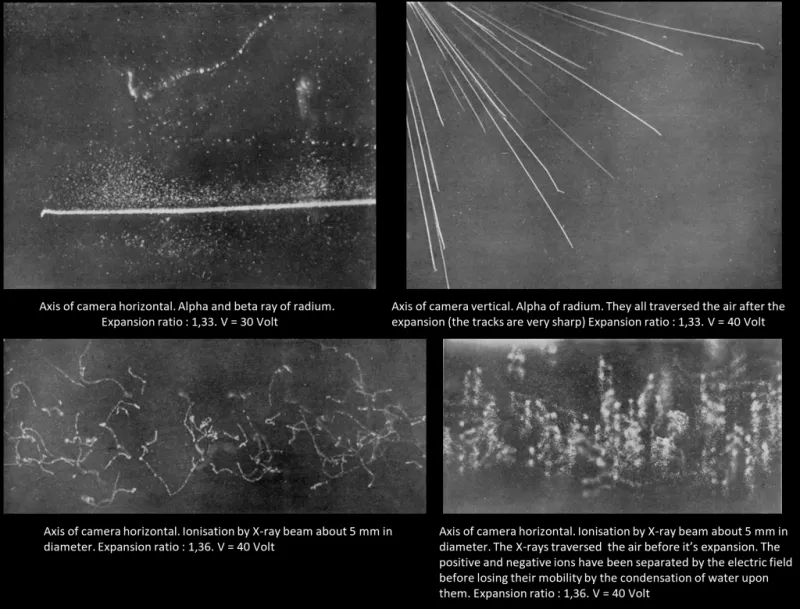
Pauli's "terrible thing" has become one of the most productive ideas in the history of physics. The particle he invented to rescue conservation of energy has, in turn, forced physicists to revise their understanding of mass, symmetry, and the deep structure of matter. In the cloud chamber of the cosmos, neutrinos leave no visible trails. But the marks they have made on our understanding of the universe are indelible.