Detected, Measured, and Still Unexplained: The Philosophical Crisis at the Heart of Muon Science
On any given afternoon, roughly ten thousand muons pass through your body every minute. They arrive from the upper atmosphere, born from the violent collisions between cosmic rays and nitrogen or oxygen nuclei miles above the Earth's surface. They are among the most reliably detected particles in experimental physics, leaving crisp, confident curves across cloud chamber photographs and triggering scintillator arrays with clockwork regularity. And yet, for all that familiarity, physicists have never fully agreed on what a muon actually is—not in any philosophically satisfying sense.
That tension between experimental abundance and interpretive uncertainty is not a footnote in muon science. It is, for many researchers, the central story.
A Particle That Arrived Without Invitation
When Carl Anderson and Seth Neddermeyer first identified what would eventually be called the muon in 1936, the discovery was met with something closer to confusion than celebration. The particle had a mass roughly 207 times that of an electron, but it interacted with matter far too weakly to be the carrier of the nuclear force that theorists had been expecting. The Japanese physicist Isidor Rabi famously asked, "Who ordered that?" The question was rhetorical, but it captured a genuine bewilderment that has never entirely faded.
The muon fit nowhere comfortably. It was not a building block of ordinary matter in any recognizable sense. It was not a force carrier. It decayed in microseconds—or rather, it should have decayed in microseconds, yet time dilation allowed it to survive long enough to reach the surface of the Earth from the stratosphere, a detail that became one of the earliest experimental confirmations of special relativity. The muon thus arrived on the scientific stage already entangled with some of the most contested ideas in modern physics.
What the Track Shows and What It Does Not
In a cloud chamber, a muon leaves a trail that is both legible and deceptive. The trail is real—supersaturated vapor condenses along the ion pairs left in the particle's wake, and the resulting droplets are photographed, measured, and catalogued. Curvature in a magnetic field reveals momentum. Density of the track suggests ionization rate. These are reproducible, quantifiable observations.
But the interpretation of those observations is where consensus begins to fracture.
For a physicist working within a strictly instrumentalist framework, the track is the muon. The particle is defined entirely by what it does to detectors—its mass, charge, and decay products are operational definitions, and questions about what the muon "really is" between measurements are considered meaningless. The track in the photograph is the full extent of what can honestly be said.
For a realist, this position is profoundly unsatisfying. The track implies a trajectory, the trajectory implies an object moving through space, and that object must have some definite character whether or not anyone is watching it. The muon, on this view, exists independently of detection—the cloud chamber merely reveals what was already there.
These two positions have coexisted uneasily in physics departments across the United States and around the world for nearly a century, and the muon has become one of the most convenient test cases for the argument precisely because it is so routinely observed.
The Anomalous Magnetic Moment and the Widening Gap
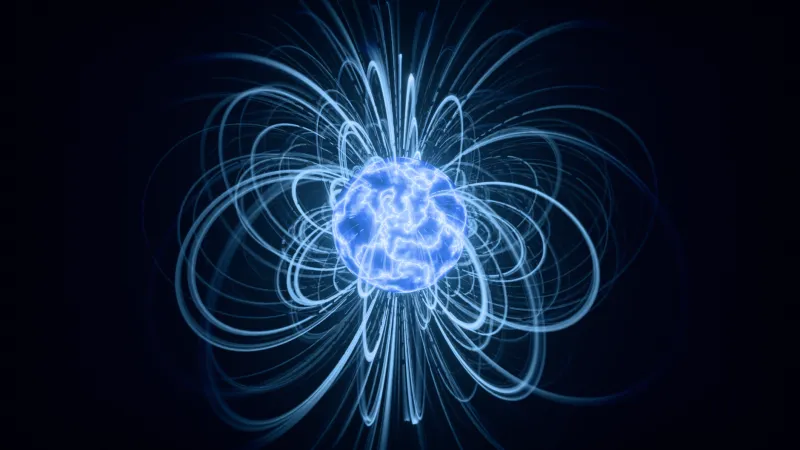
In recent years, the muon has moved from a philosophical curiosity to an active source of experimental controversy. The muon's anomalous magnetic moment—a quantity denoted g-2, describing how the particle's magnetic behavior deviates from theoretical predictions—has become one of the most scrutinized measurements in contemporary particle physics.
The Muon g-2 experiment at Fermi National Accelerator Laboratory in Batavia, Illinois, has produced results suggesting that the muon behaves in ways the Standard Model of particle physics does not fully account for. The discrepancy is small in absolute terms but statistically significant enough to generate serious discussion about whether new physics—particles or forces not yet incorporated into existing theory—might be responsible.
The irony is sharp. Here is a particle detected constantly, measured with extraordinary precision, and analyzed by some of the most sophisticated instrumentation ever constructed—and it still refuses to be fully explained. The gap between what the experiment observes and what the theory predicts is itself a kind of philosophical statement: that detection and understanding are not the same thing.
The Interpretive Divide in Practice
Speak to working experimental physicists about this divide and you will find that most have made a kind of private peace with it. The pragmatic demands of running a detector facility, analyzing terabytes of data, and publishing results that meet peer review standards leave little room for sustained philosophical debate. The muon is treated as a particle, its properties are measured, and the numbers are reported.
But probe a little deeper—ask what is actually happening in the instant before a muon track forms, or what it means for the muon to "exist" during the 2.2 microseconds of its average lifetime—and the conversation changes. Some researchers will acknowledge, quietly, that the foundations of quantum mechanics remain genuinely unsettled. Others will deflect toward the mathematics, arguing that the formalism is reliable even if its interpretation is contested. A smaller number will engage directly with the philosophical literature, citing figures like David Bohm or Hugh Everett in the same breath as their experimental colleagues.
What is notable is that none of these positions has won. The muon has been detected billions of times, and the debate about its fundamental nature continues.
Why This Matters Beyond the Laboratory
For a general audience, it might be tempting to dismiss this as an internal academic dispute with no practical consequences. That dismissal would be a mistake.
The question of what it means for a particle to be "real"—whether quantum objects have definite properties in the absence of measurement, and what role the act of detection plays in constituting physical reality—is not merely a puzzle for specialists. It bears directly on how science itself is understood: as a method for discovering a pre-existing world, or as a framework for organizing and predicting the outcomes of experiments.
The muon, precisely because it is so common and so well-measured, makes this question concrete. It is not an abstraction. It leaves visible trails. It triggers real instruments. It arrives in basements and classrooms and research facilities across the country, announcing itself with the same reliable confidence every time.
And yet, that confidence is, in a precise sense, incomplete. The muon is detected, measured, and still, in some fundamental way, unexplained.
A Particle Worth Arguing About
The cloud chamber photograph does not resolve the argument. It sharpens it. A curved white line against a dark background is simultaneously the most direct evidence of a particle's passage and the beginning of a dispute that has occupied physicists for nearly ninety years.
That is, perhaps, the most honest thing that can be said about the muon: it is a particle that rewards attention without surrendering its secrets. Every track it leaves is an invitation to look more carefully—and a reminder that looking carefully is not always the same as understanding completely.