Secrets in the Silver Fog: How Algorithms Are Unearthing Phantom Tracks in Decades-Old Cloud Chamber Archives
In climate-controlled storage rooms at universities and national laboratories across the United States, cardboard boxes and archival binders hold tens of thousands of glass photographic plates and acetate film prints. Most were exposed between the 1930s and the early 1960s, during the golden era of cloud chamber experimentation. For decades, they have sat largely undisturbed, their visual information considered fully extracted and their scientific value presumed exhausted. That presumption is now being tested.
A small but growing community of physicists and data scientists has begun applying contemporary image-recognition software and machine-learning pipelines to these historical archives, and the results are, in the understated language of academic physics, unexpected. Tracks that original researchers either overlooked or recorded in laboratory notebooks as "artifact" or "inconclusive" are reappearing under algorithmic scrutiny with properties that do not map cleanly onto any known particle species documented at the time.
The Original Limitations of Human Eyes
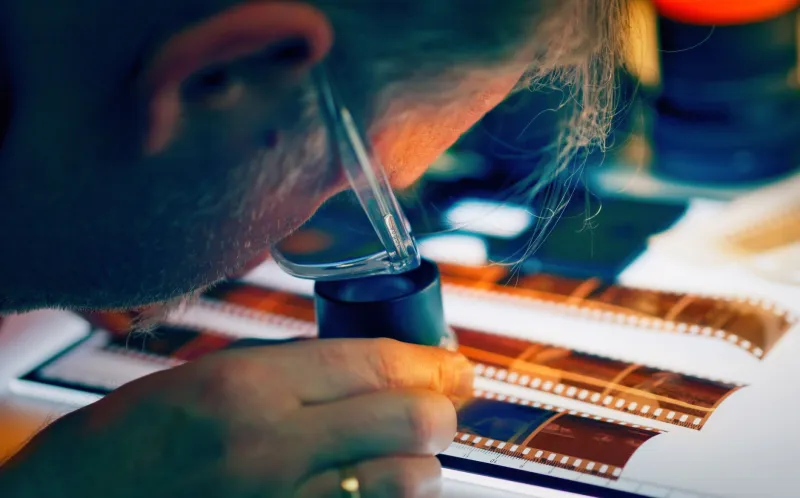
To appreciate why these rediscoveries are significant, it helps to understand how cloud chamber analysis was actually conducted during its heyday. After a photograph was developed, a trained physicist or a skilled laboratory technician — often a graduate student — would examine the image under magnification, measure track curvature with a mechanical protractor, estimate ionization density by counting droplet spacing, and record findings by hand. The process was painstaking and inherently selective.
Human visual processing is extraordinarily good at recognizing familiar patterns, but it is correspondingly poor at flagging anomalies that fall outside an observer's conceptual framework. A faint, slightly curved trail appearing at an unusual angle in the corner of a photographic plate might be recorded as a scratch, a secondary cosmic ray fragment, or simply left uncatalogued. Nobody was being negligent. The researchers of that era were working at the frontier of knowledge, and they could only interpret what their theoretical vocabulary allowed them to name.
The situation is analogous, in some respects, to astronomers who photographed galaxies throughout the twentieth century without recognizing what we now call gravitational lensing arcs — the curved images of distant objects bent by intervening mass. The data was there. The interpretive framework was not.
What Modern Analysis Is Finding
Researchers at several institutions, including groups affiliated with Fermilab's historical science initiatives and university physics departments with strong archival collections, have been digitizing original cloud chamber plates at high resolution and feeding the resulting images into convolutional neural networks trained on contemporary particle track databases. The networks flag tracks that display statistically unusual combinations of curvature, droplet density, and length.
Among the categories of anomalous tracks drawing the most attention are a class of very short, densely ionizing paths that do not correspond to known alpha particle signatures from the radioactive sources used to calibrate the original chambers. There are also occasional instances of paired tracks emerging from a single point in configurations that suggest a neutral particle decay — but with a geometry inconsistent with the kaon and lambda hyperon decays that physicists of the period were actively hunting.
None of this constitutes, at present, evidence of a new particle. The more cautious interpretation — and the one most physicists currently favor — is that these tracks represent known physical processes occurring at energies or angles that made them difficult to classify with the tools and theoretical expectations of the time. Muon scattering events, rare pion interactions, and even early cosmic-ray cascade phenomena are all candidates for what the algorithms are surfacing.
But a smaller faction of researchers is unwilling to close the question so quickly.
The Problem of Provenance
Reanalyzing historical data introduces complications that do not arise in fresh experimental work. The most fundamental challenge is establishing provenance — confirming that a track flagged by an algorithm actually appeared in the cloud chamber and was not introduced during the photographic development process, subsequent handling, or digitization itself.
Archivists and physicists working on these projects have developed protocols to address this. Cross-referencing multiple prints made from the same negative, comparing flagged tracks against the original laboratory notebooks for any contemporaneous notation, and physically re-examining the original plates under different illumination conditions all serve as verification steps. When a track survives all three checks, the case for its authenticity becomes substantially stronger.
Another complication involves the original experimental conditions. Cloud chambers of the 1930s and 1940s varied considerably in their gas mixtures, magnetic field strengths, and operating temperatures. Without precise knowledge of the conditions under which a specific photograph was taken, calculating the momentum of a track from its curvature becomes an exercise in estimation rather than measurement. Researchers are mining original grant applications, published papers, and surviving laboratory correspondence to reconstruct these parameters as accurately as possible.
What It Means to Reopen a Closed Book
The broader significance of this work extends beyond any specific anomalous track. Science, as an institution, tends to treat its historical data as permanently settled once the original researchers have published their conclusions. The notion that a graduate student with a laptop and access to a university archive might find something meaningful in a seventy-year-old photograph — something that eluded Nobel laureates working at the height of their powers — carries an uncomfortable implication: that scientific archives are not inert records but living repositories whose full content has not yet been read.
This is, in one sense, an encouraging idea. It suggests that the investment made by earlier generations in careful experimental work continues to yield returns long after the original investigators are gone. The photographs taken by teams at Caltech, MIT, and the University of Chicago during the postwar particle physics boom were produced at enormous effort and cost. If modern tools can extract additional scientific value from that work, the return on that historical investment improves considerably.
In another sense, it raises quieter questions about what else might be hiding in plain sight across the broader landscape of twentieth-century experimental records — not only in particle physics, but in fields ranging from astronomy to biochemistry, where large volumes of analog data were collected, partially analyzed, and archived.
The Detective Work Continues
For now, the physicists and archivists engaged in this work describe their enterprise in measured terms. They are not announcing discoveries. They are cataloguing anomalies, building databases of flagged tracks, and inviting the broader community to examine their methodology and findings. Several groups have made their digitized image sets publicly available, following a model established by open-science initiatives in astronomy and genomics.
What makes the work genuinely compelling, from the perspective of anyone drawn to the history of experimental physics, is the texture of the detective problem itself. Every flagged track is a small puzzle: a physical event that occurred in a glass-and-metal apparatus, in a laboratory that may no longer exist, photographed by a researcher whose name appears in a paper citation but whose specific observations were never fully recorded. Reconstructing the story of that event — what particle produced it, under what circumstances, and why it was not recognized at the time — requires equal parts physics, history, and forensic patience.
The cloud chamber, as an instrument, was always about making the invisible visible. It now appears that some of what it made visible was not fully seen the first time around. The fog has lifted somewhat. The trails remain.