Half a Mile Down and Listening: The Underground Science of Catching Ghost Particles
There is something counterintuitive about the idea of building an observatory underground. Astronomy, in the popular imagination, belongs to mountaintops and open skies — telescopes aimed upward, not instruments buried beneath hundreds of meters of ancient rock. Yet for the physicists who hunt neutrinos, the logic inverts entirely. To see the universe's most elusive particles, you first have to hide from everything else.
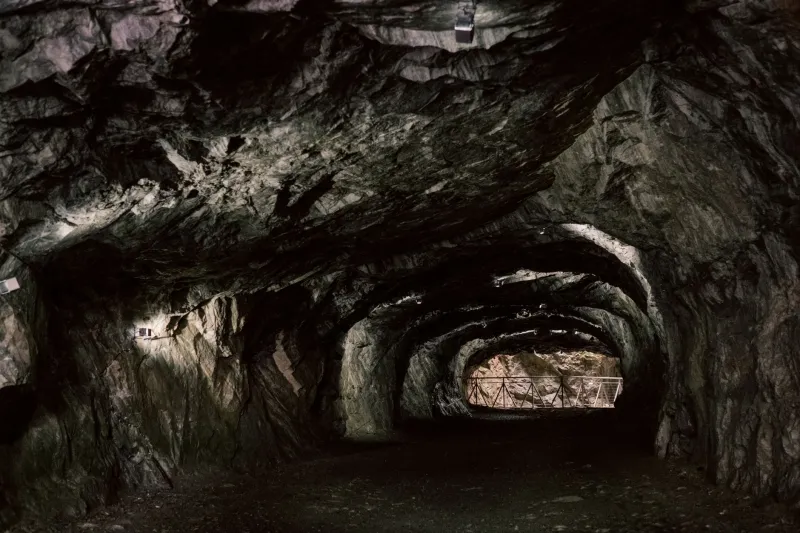
The Soudan Underground Laboratory, carved into a disused iron mine in the remote forests of northeastern Minnesota, stands as one of the most compelling illustrations of this principle. What began as an industrial excavation site in the late nineteenth century became, more than a hundred years later, a frontier of experimental physics — and the story of how that transformation happened says as much about the nature of neutrinos as it does about human ingenuity.
Why Bury the Detector?
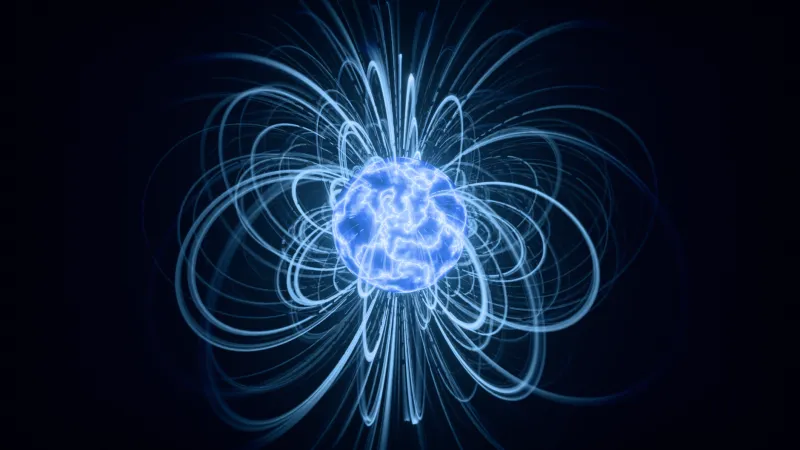
Neutrinos are famously reluctant particles. They carry no electric charge, possess almost no mass, and interact with ordinary matter so rarely that trillions of them pass through your body every second without leaving any trace whatsoever. The sun produces them in staggering quantities; supernovae release them in catastrophic bursts; nuclear reactors generate them as a byproduct of fission. They are everywhere, and they are almost entirely invisible.
Detecting a neutrino requires an enormous target — typically a massive volume of water, ice, or dense material — and extraordinary patience. But patience alone is not sufficient. The detectors themselves are exquisitely sensitive, and that sensitivity creates a serious problem: the surface of the Earth is saturated with radiation. Cosmic rays, the high-energy particles that rain down continuously from space, would overwhelm any surface-level neutrino detector with a relentless blizzard of false signals. Every muon, every stray gamma ray, every energetic proton would register as noise, drowning out the rare, precious moments when a neutrino actually interacts with the detector material.
Rock, it turns out, is the most practical solution. A thick enough layer of earth absorbs the cosmic ray background almost completely, leaving only the neutrinos — which pass through rock as easily as they pass through air — to interact with the detector below. The deeper the laboratory, the quieter the environment. At Soudan's operational depth of roughly 700 meters, the cosmic ray flux was reduced by a factor of approximately 100,000 compared to the surface. That silence was the whole point.
An Iron Mine Becomes a Physics Laboratory
The Soudan mine had produced iron ore since the 1880s, but by the mid-twentieth century its commercial usefulness had largely run its course. The Minnesota Department of Natural Resources eventually converted the site into a state park, and the mine's lower levels, still structurally sound and remarkably dry by underground standards, attracted the attention of physicists looking for exactly the kind of deep, accessible, stable environment that neutrino detection demands.
The first phase of the Soudan experiment, initiated in the early 1980s, deployed a relatively modest detector to search for proton decay — a process predicted by Grand Unified Theories of particle physics but never conclusively observed. Though proton decay remained elusive, the infrastructure and expertise developed at Soudan proved invaluable. A second, far larger detector, SOUDAN 2, followed in the late 1980s and operated for more than a decade, accumulating data on atmospheric neutrinos generated when cosmic rays strike the upper atmosphere.
The results from SOUDAN 2 contributed meaningfully to one of the landmark discoveries of late-twentieth-century physics: the confirmation that neutrinos oscillate between their three known types, or "flavors." This behavior implies that neutrinos possess mass — a finding that contradicted the original formulation of the Standard Model and opened significant new questions about the fundamental structure of matter. Soudan was not the only laboratory contributing to this picture; experiments in Japan and Canada were pursuing parallel lines of evidence. But the Minnesota mine played a genuine role in assembling the case.
The NuMI Beam and Long-Baseline Physics
The most ambitious chapter in Soudan's scientific life arrived with the construction of the NuMI beamline — Neutrinos at the Main Injector — at Fermilab, the particle physics facility located outside Chicago. Engineers and physicists designed a system capable of generating an intense, directed beam of muon neutrinos and aiming it through the Earth toward the Soudan detector, roughly 735 kilometers away. No tunnel was required; the neutrinos simply passed through the intervening geology as though it were not there.
The MINOS experiment, which used this beam and a massive magnetized steel detector installed at Soudan, was designed to measure how many neutrinos of a given flavor survived the journey from Fermilab. By comparing the beam's composition at its origin against what arrived in Minnesota, physicists could characterize the oscillation process with considerable precision. The collaboration published results over more than a decade, refining the parameters that describe how neutrinos transform as they travel.
This technique — sending a neutrino beam across hundreds of kilometers and measuring it at a distant underground detector — has since become a standard approach in the field. The successor experiment, NOvA, uses a far larger detector in Ash River, Minnesota, still drawing on the NuMI beam but positioned to address newer questions about the asymmetry between matter and antimatter neutrinos.
What the Silence Teaches
There is a poetic dimension to the underground laboratory that is easy to overlook in the technical literature. The cloud chamber, the instrument that gave this publication its name, worked by making invisible particles visible — turning the abstract into the immediate, the theoretical into something you could photograph and hold. The underground neutrino detector operates on a different but related philosophy: it creates a space where the noise of the ordinary world falls away, and the faintest signals from the most fundamental processes in the universe can finally be heard.
Soudan itself ceased active operations in 2012, its primary experiments having reached their scientific conclusions. The site remains a state park and continues to attract visitors curious about the intersection of industrial history and frontier science. The caverns that once housed MINOS now serve as a reminder that some of the most consequential physics of the twentieth century happened not in gleaming surface facilities but in the dark, quiet depths of a Minnesota hillside.
The broader lesson — that isolation and depth are scientific assets, not liabilities — continues to shape the field. Laboratories carved into mountains in Italy, Japan, Canada, and South Dakota pursue similar goals with increasingly sophisticated instruments. Each of them is, in its own way, an heir to the logic first demonstrated at Soudan: that to understand the universe, you sometimes have to go underground and listen very carefully to the silence.